OFFICIAL ANNOUNCEMENT! SAP presents the First Helitactic Training Course in Peru. From May 23 to 27, 2026. Learn more
Helitactic Course Peru: May 23-27, 2026. Learn more

Rescue in Peru It’s better to be safe than to be rescued

Rescue in Peru

It’s better to be safe than to be rescued.

If you are considering mountaineering in the Peruvian Andes, come prepared.

Safety in the Peruvian Andes requires planning and knowledge. I hope you never have to be rescued in Peru, but I want you to know that in an emergency, there are a lot of people trained to help.

The best mountaineering in Peru

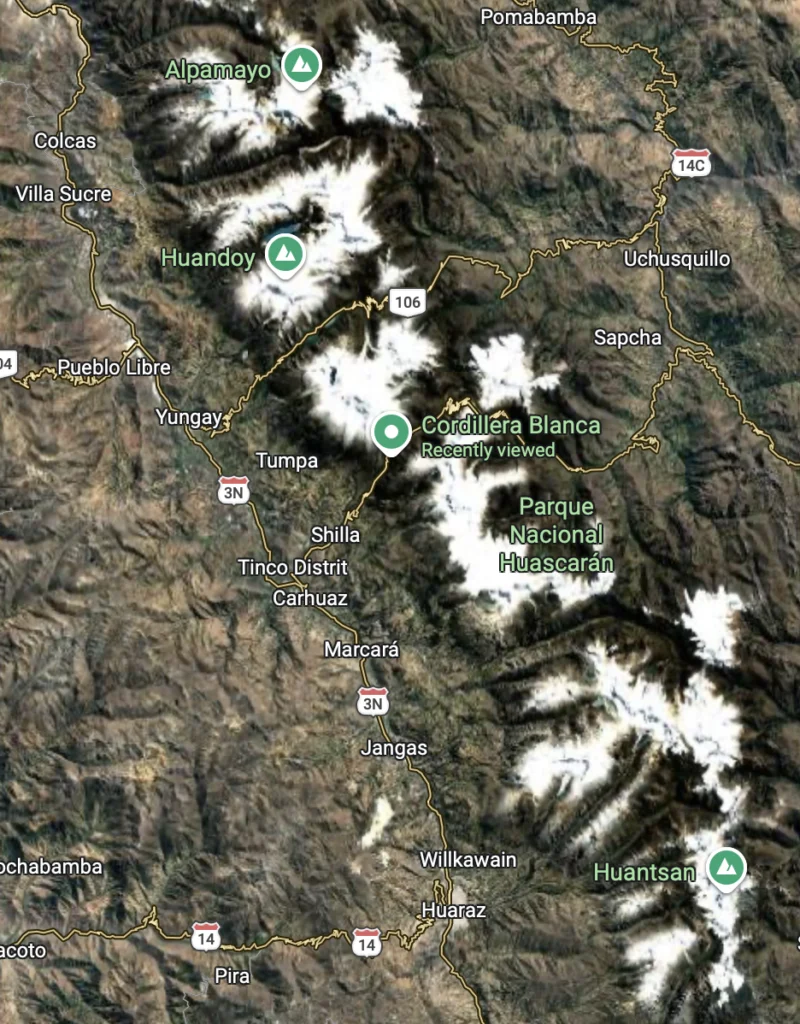
The Cordillera Blanca is a range of the Andes Mountains that’s north of Lima, in the Áncash region. Most visitors arrive by bus from Lima to the city of Huaraz (8 hours) or fly to the Anta airport near Marcará, an hour north of Huaraz.

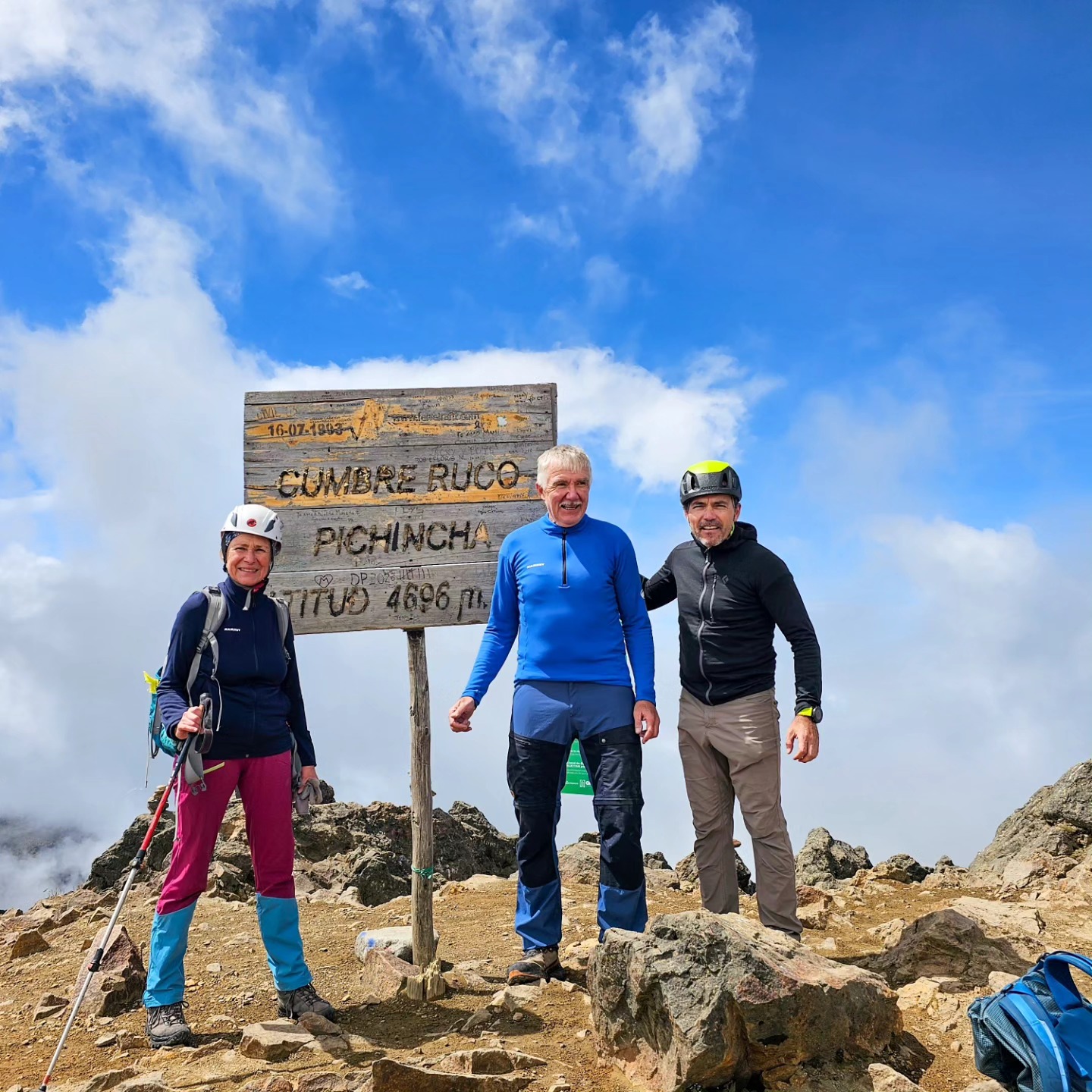
The Cordillera Blanca has lots of hiking.

The Cordillera Blanca, especially in Huascarán National Park, also has dozens of day hikes and multi-day treks that thousands of people do every day in the dry season from May through September. It’s a very popular place and lots of people who are unfamiliar with the mountains and trails wander around on their own, without a group or guide, like I did on this hike to Churupita.

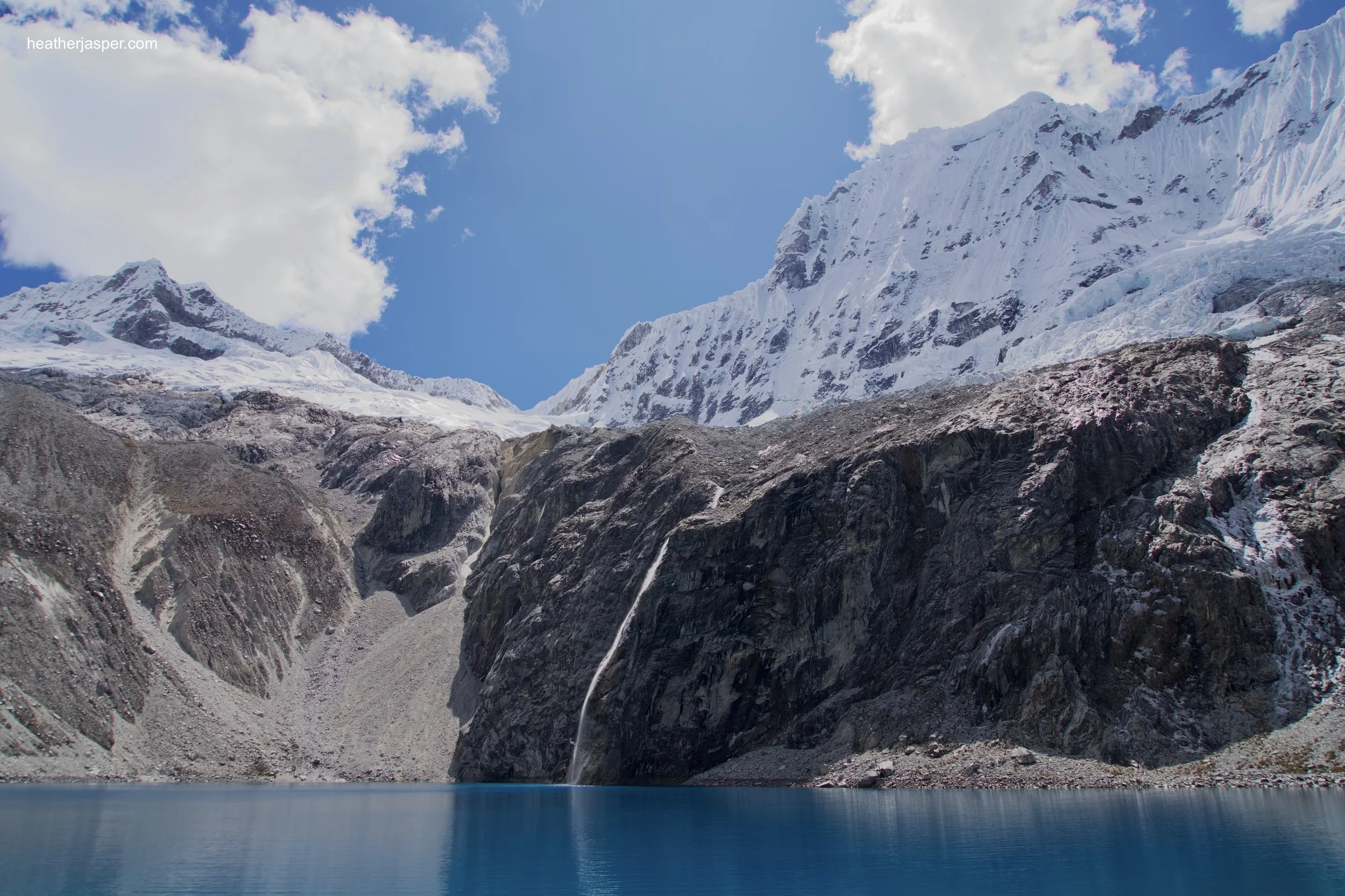
Lake 69 (4,600m/15,092ft above sea level) is one of the most popular hikes in the Cordillera and from June to August hundreds of people every day hike up here.

The more people who climb and hike, the more accidents there will be.

You don’t have to be an extreme climber to get yourself in a difficult situation in the Cordillera Blanca. The altitude alone can cause you significant health risks if you’re coming directly from sea level and don’t take the time to acclimate before going to altitudes above 4,000 meters (13,123 feet).

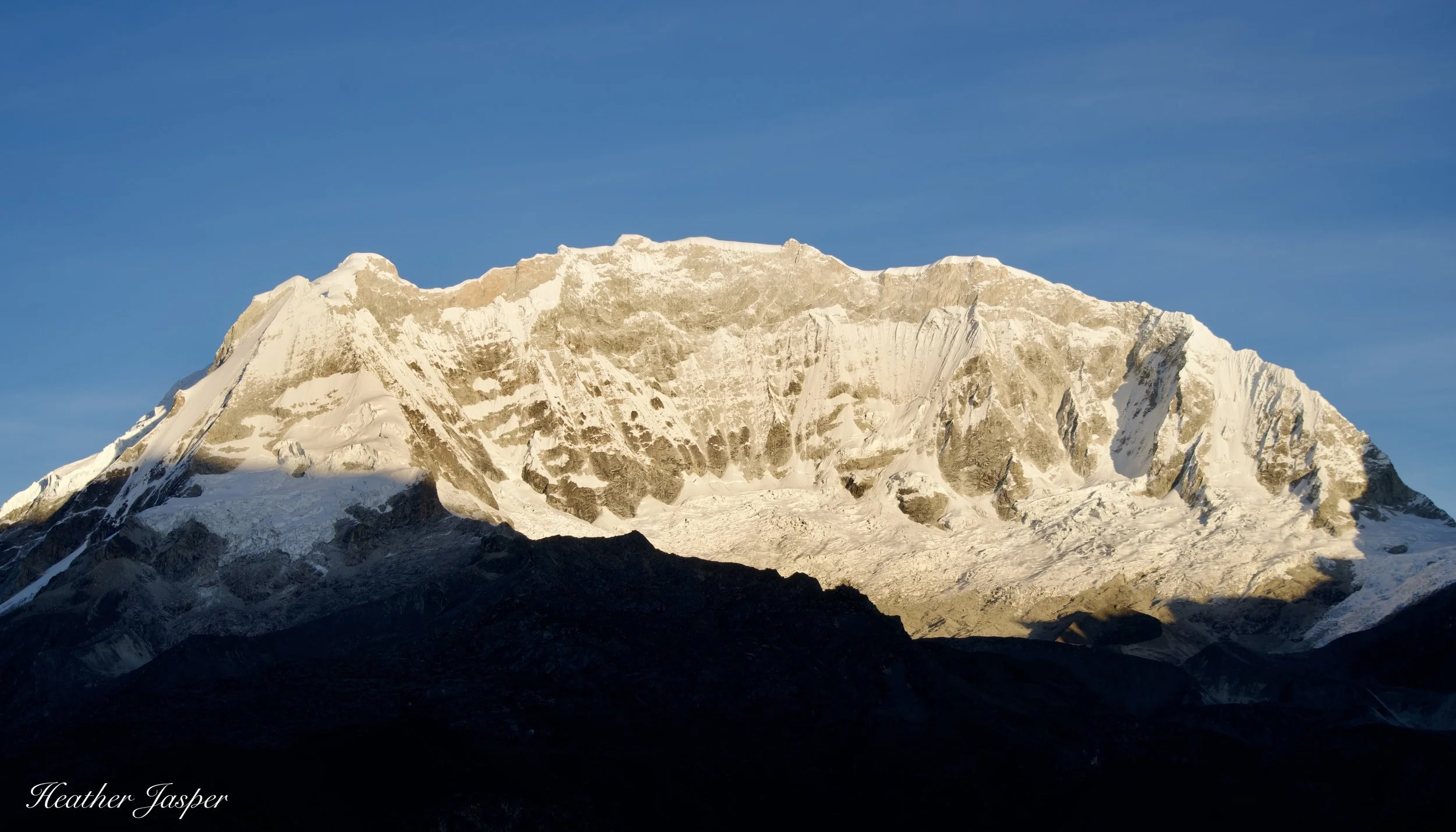
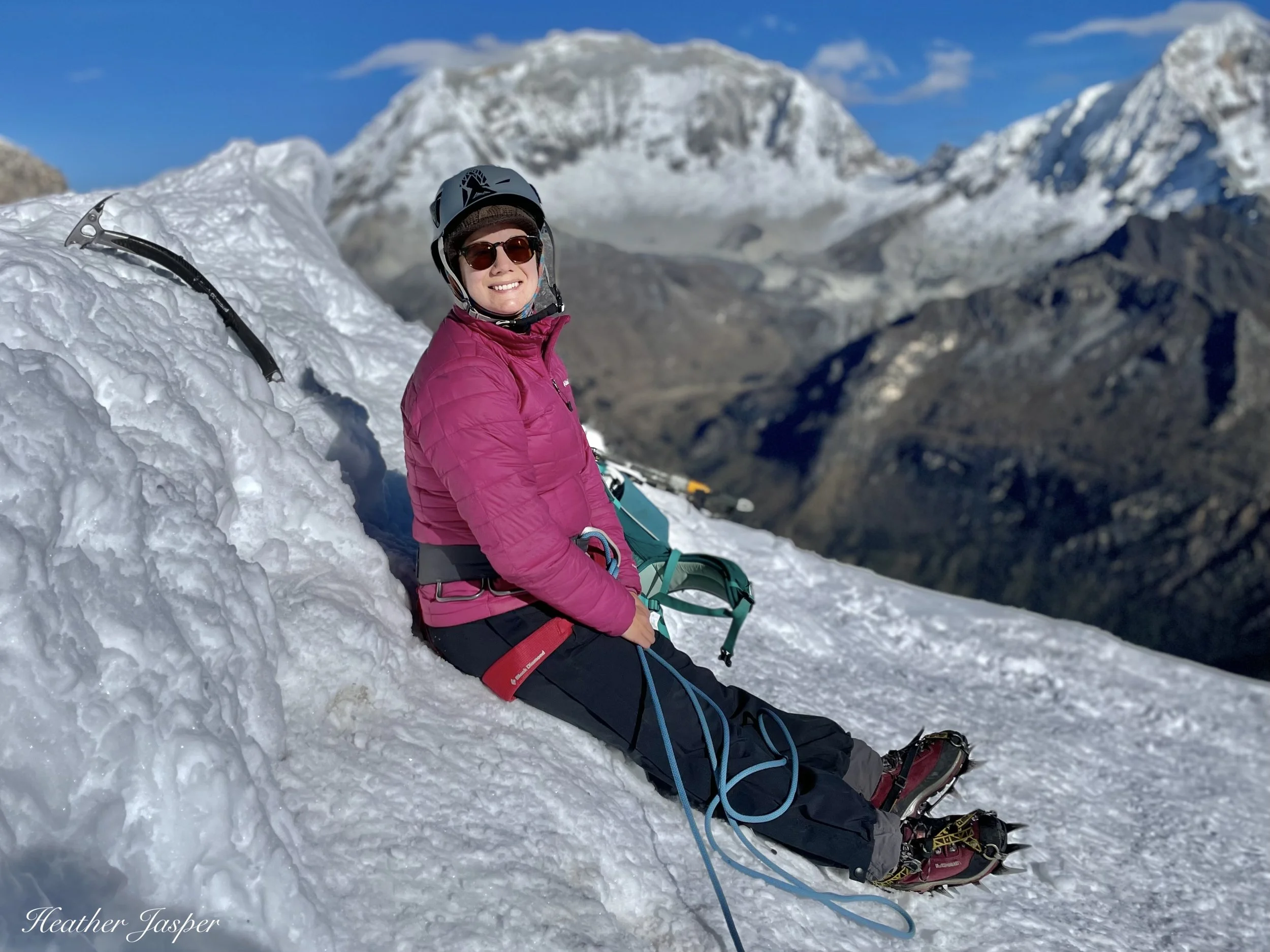
In 2022, I climbed the Mateo glacier to 5,150 meters (16,896 feet) above sea level.

Do emergency beacons work in Peru?

Yes, Garmin inReach and other emergency beacons and satellite communicators work in Peru. The signal is received at a command center in Lima, from where rescues are coordinated. In the Cordillera Blanca, rescue teams are generally sent from Huaraz and can include guides trained in Search and Rescue (SAR), local and national police, paramedics and the military.

Having a local guide with you can speed up this process and get help sooner.

In most rescues, mountain guides will get you down off the mountain to where paramedics can drive an ambulance or to where the Peruvian Air Force can land a helicopter.

Who will rescue you in Peru?

If you need to be rescued in the Cordillera Blanca, guides, police and paramedics from Huaraz are usually the first on the scene. These local SAR experts live and work in the Cordillera Blanca and most know every trail, peak and glacier in the area. They train regularly to evacuate people in distress from all kinds of accidents and emergencies.

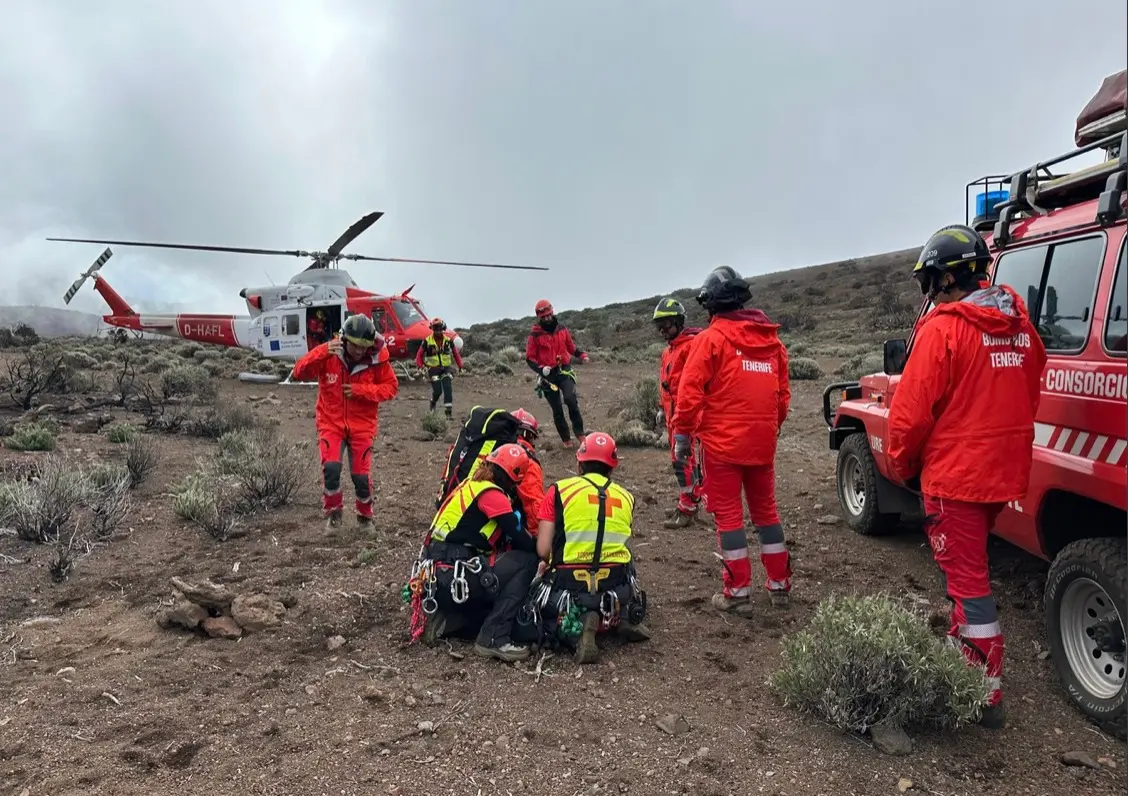
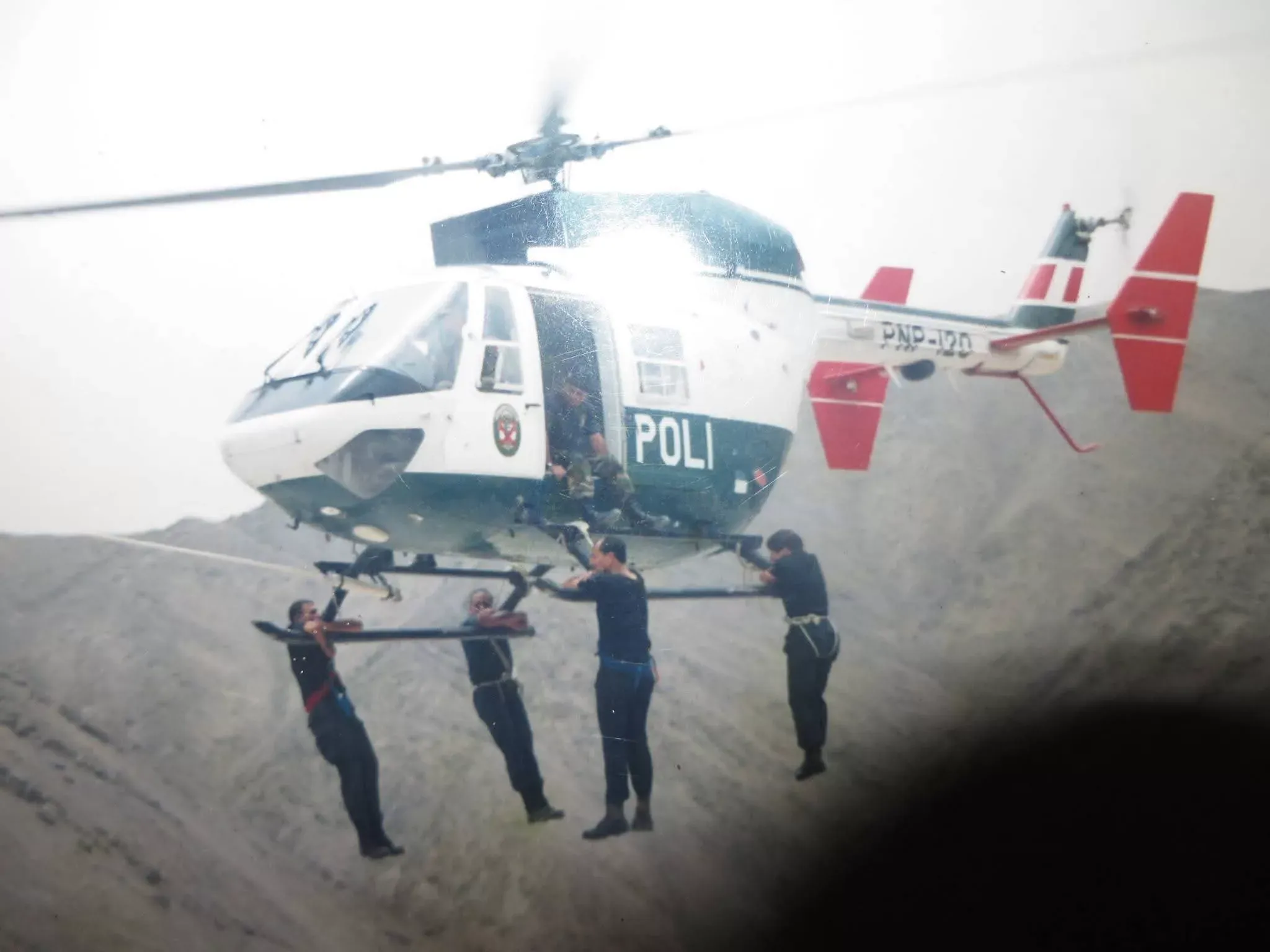
In Peru, military SAR teams have a lot more capability than civilian teams. The military has newer and more high-tech rescue equipment and they have helicopters. If you are so gravely injured that you need a rapid evacuation directly to a hospital, they might send a helicopter for you.

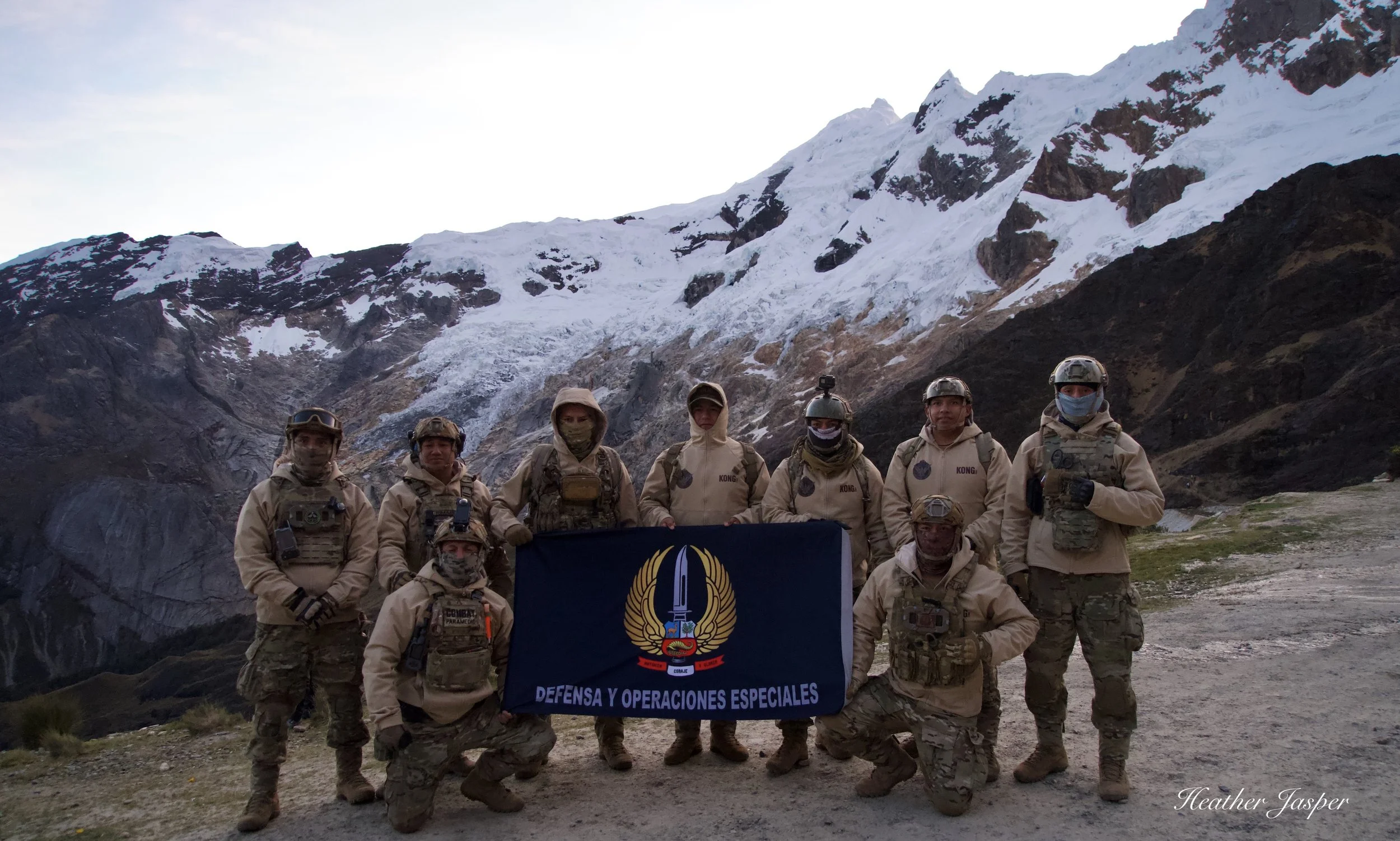
Peruvian Special Forces train and operate in the most extreme conditions: high altitude mountains and dense jungle.

Civilians and military train together for search and rescue (SAR).

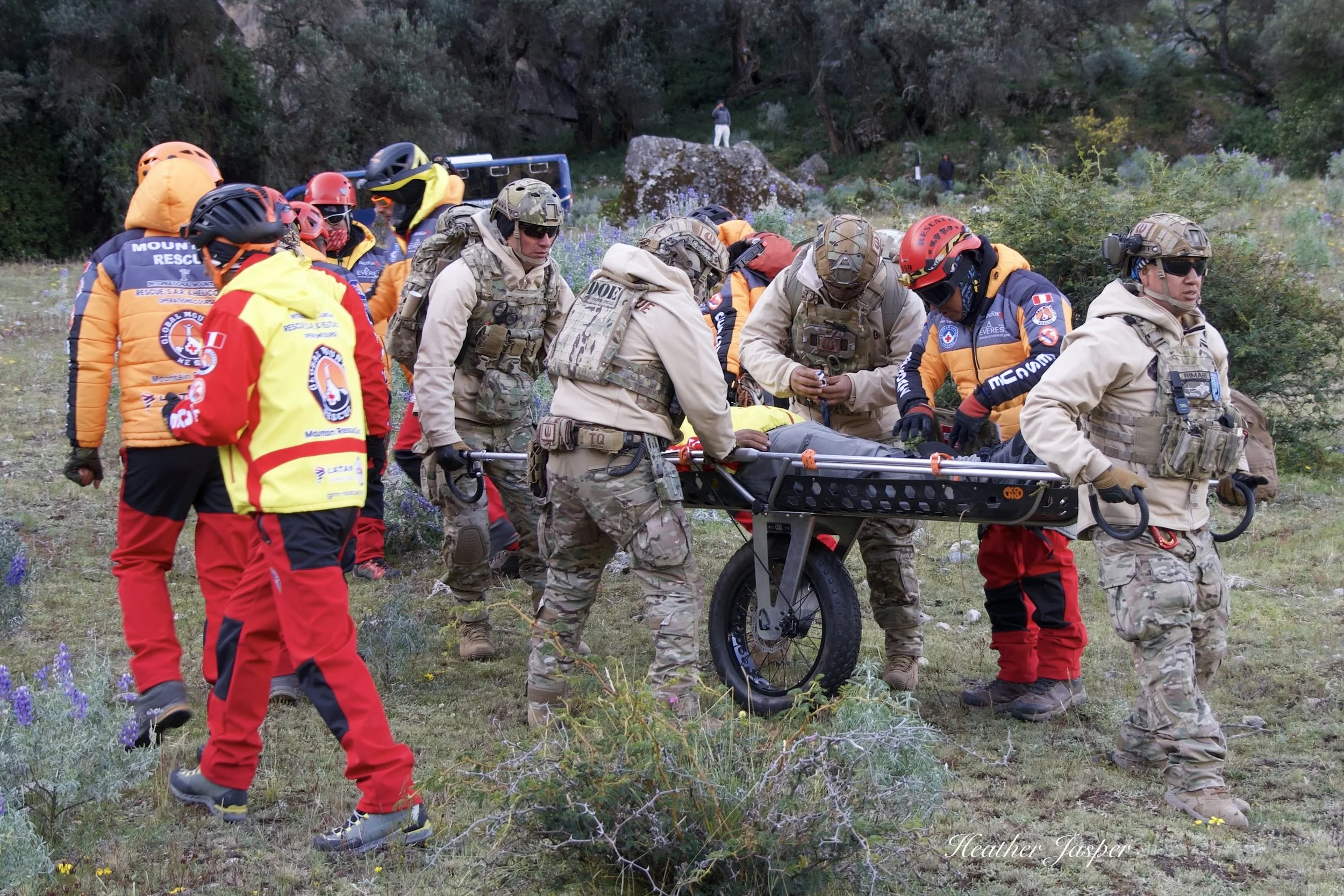
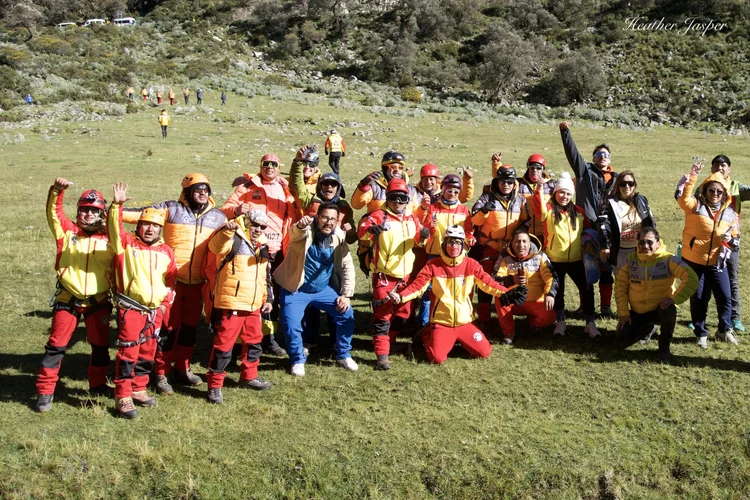
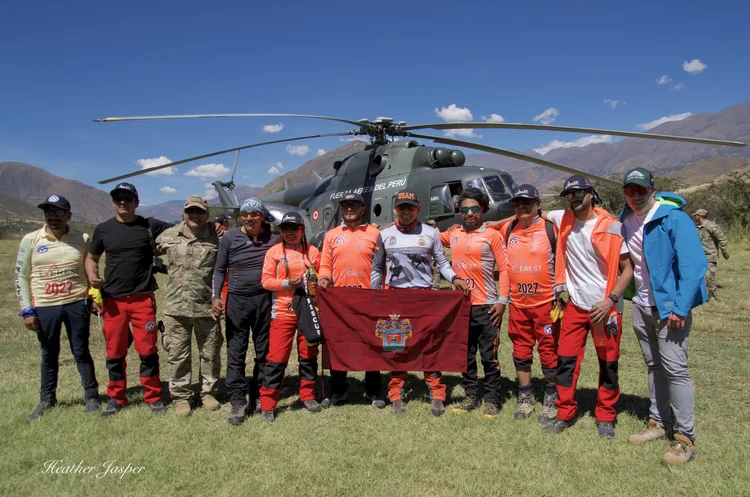
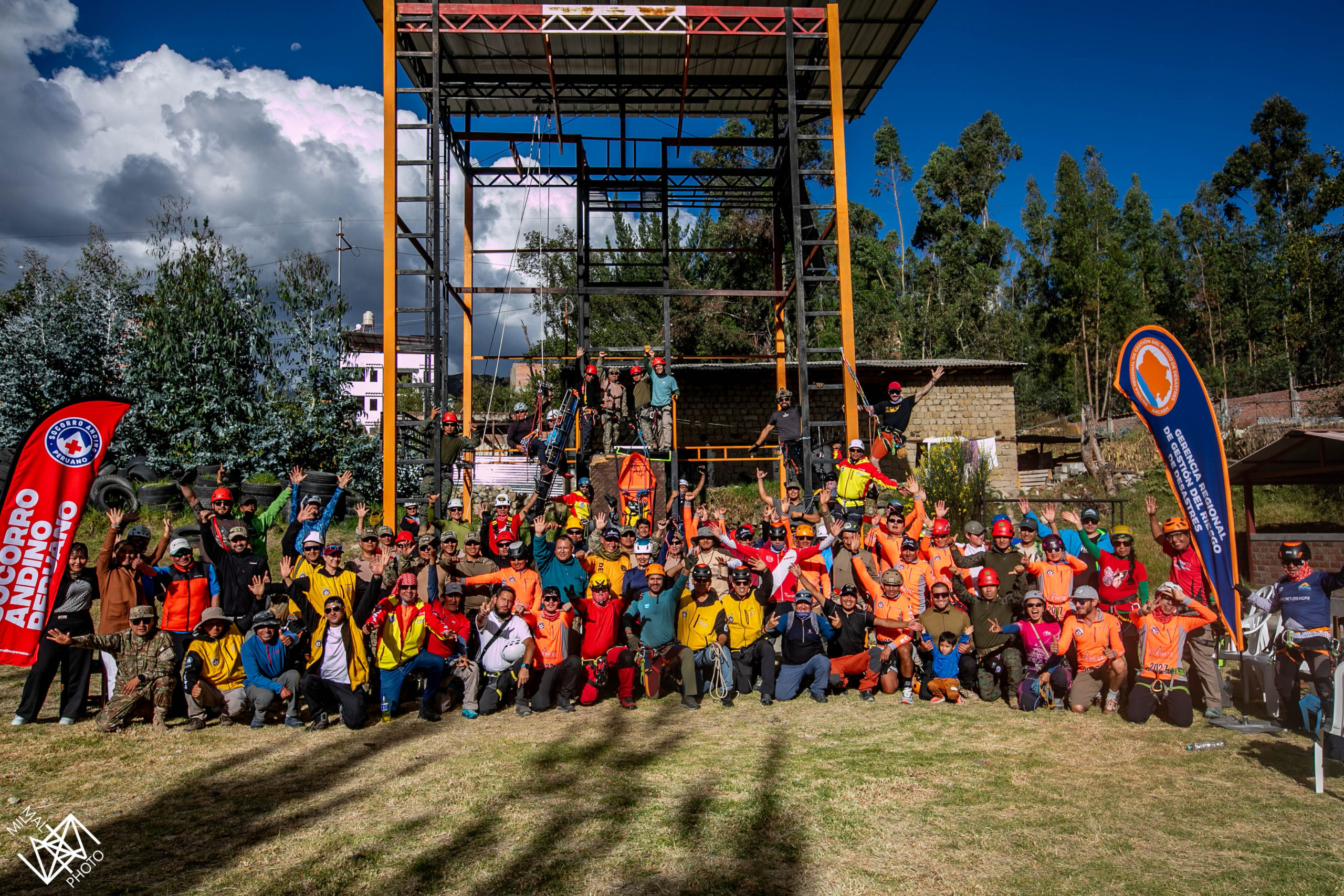
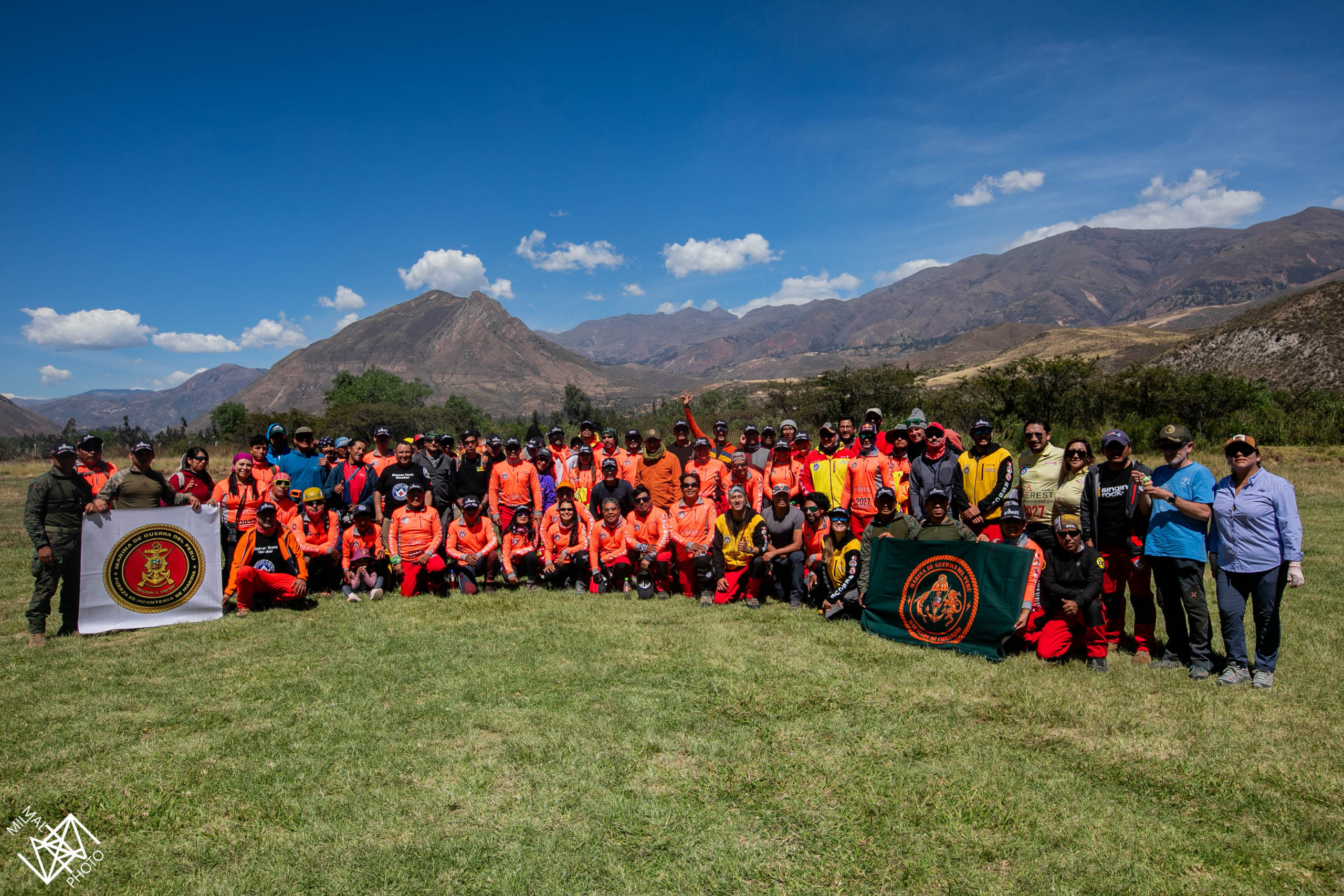
I participated in a 5-day training based in Huaraz in May 2026 organized by Socorro Andino Peruano, which included civilian mountain guides, SAR experts, paramedics, firefighters and local and national police. The Peruvian Air Force and Navy Infantry integrated into the civilian rescue teams and trained alongside them. It was a truly impressive show of force with careful coordination between civilian and military teams.

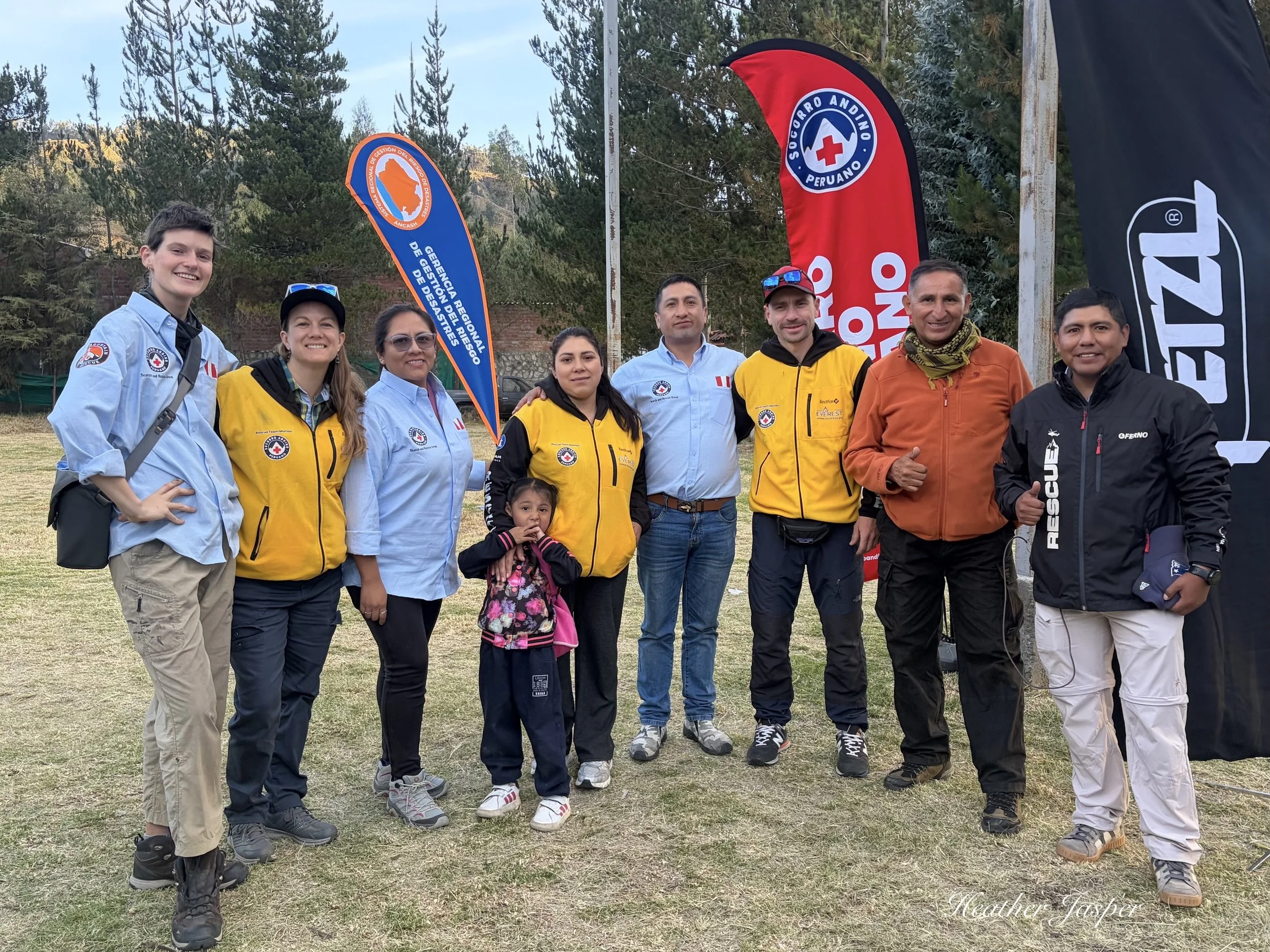
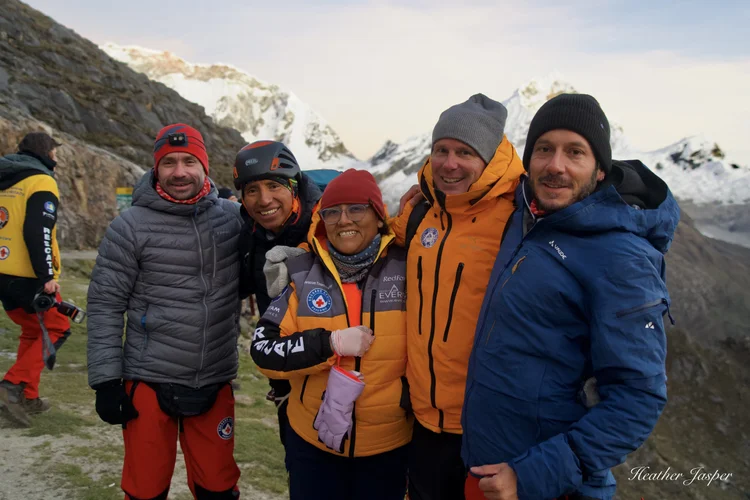
I loved working with this team! Left to right: Miela, me, Koseth, Monica & Eric, Roman, Luis Atalaya & Luis Fernandez.

My experience with SAR training in Peru.

From May 22-27, integrated Search and Rescue (SAR) teams in Huaraz significantly increased Peru’s capabilities in high altitude SAR with a five-day heli-tactical course on aerial evacuations organized by Socorro Andino Peruano. The course culminated in a successful simulation of an avalanche on the Mateo Glacier at around 4,800 meters (15,750 feet) above sea level and the rescue of six victims, of which three were evacuated by helicopter. Participants were licensed high-altitude mountain guides, local SAR experts, firefighters, national and local police, local paramedics and three branches of the Peruvian military.

As the Peruvian Andes become more popular and the number of climbers increases, the need for qualified and experienced SAR teams inevitably increases. Socorro Andino Peruano is committed to improving SAR capabilities in the Cordillera Blanca and throughout Peru. These trainings are essential because practice makes rescues faster and more successful.

“I don’t risk my life to save yours. I train to save your life without risking mine.” -Luis Fernandez

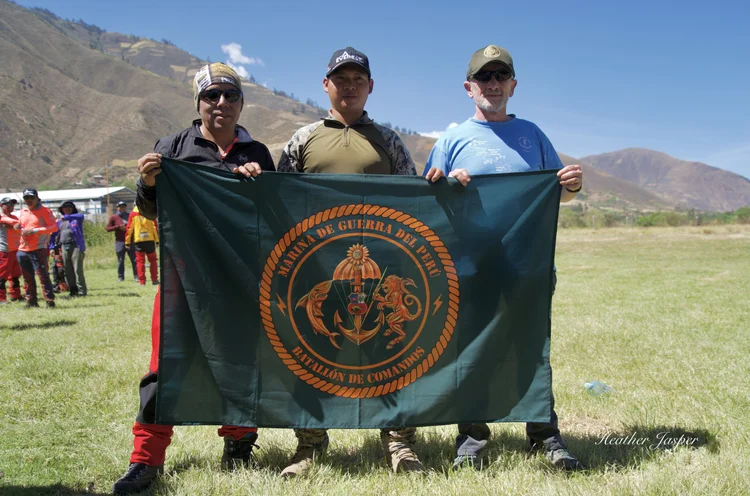
Peter Valdez (Navy Infantry Commando Battalion) and Pietro Rago (Italian rescue expert) train civilians and military during the May 2026 Socorro Andino Peruano heli-tactical aerial evacuation course.

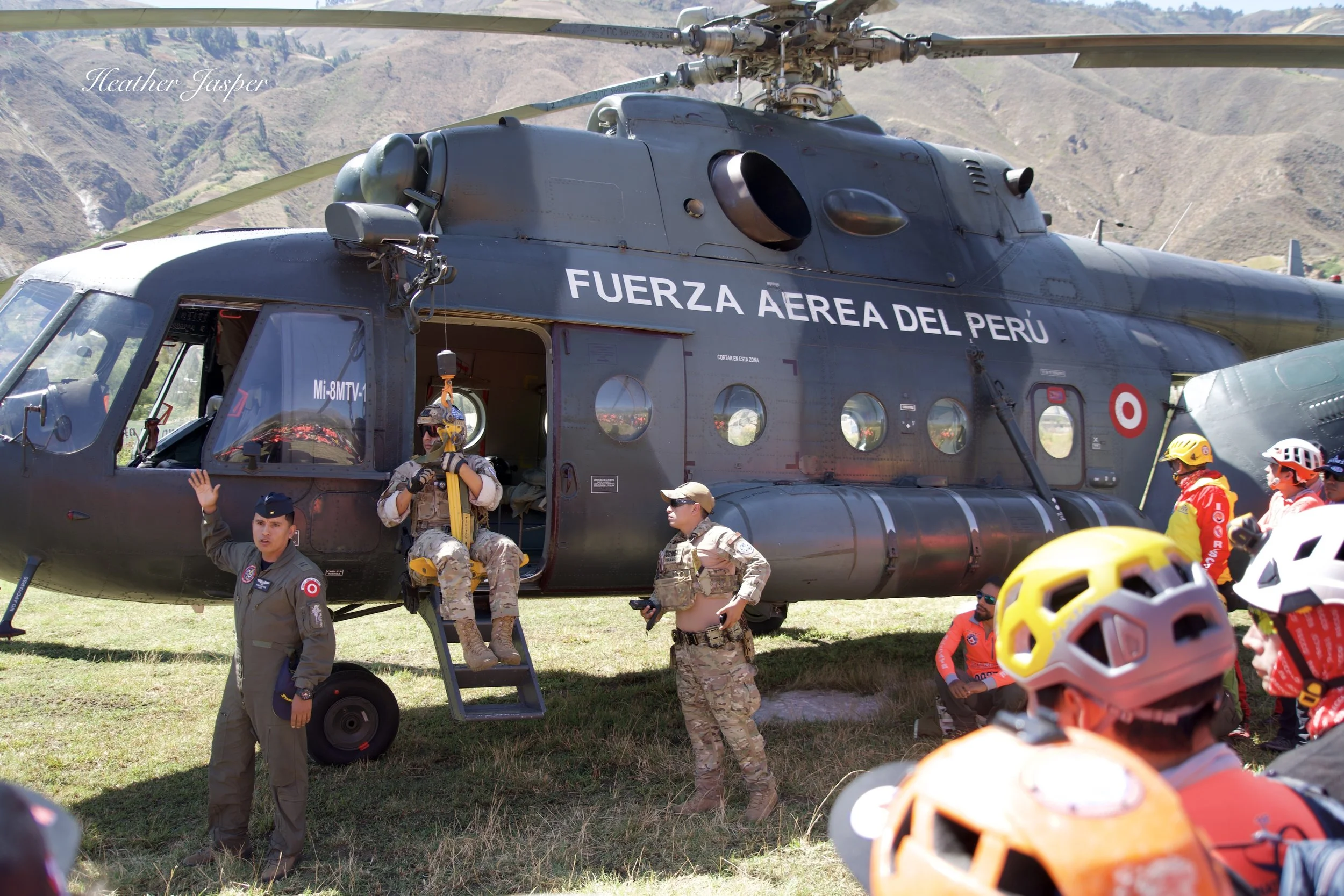
Aerial evacuations in Peru are done in cooperation with the Peruvian Air Force Special Forces, Fuerza Aérea Peruana Defensa Y Operaciones Especiales (FAP DOE). Members of the FAP DOE, along with the crew of an MI-8 helicopter and members of the Peruvian Navy Infantry Commando Battalion worked together with civilians throughout the five days. All military personnel interviewed said they were impressed with the professionalism and deep knowledge of the guides, often citing admiration for the guides’ experience climbing the peaks of the Cordillera Blanca and their SAR experience.

The Cordillera Blanca is the highest part of the Peruvian Andes and most of its peaks are within Huascarán National Park, named for Mt. Huascarán, the highest mountain in Peru at 6,768 meters (22,205 feet) above sea level. The park has another 26 peaks above 6,000 meters and includes 663 glaciers, the largest number of tropical glaciers in the world. The beautiful scenery, challenging climbing and relative ease of access from the Jorge Chavez International Airport in Lima, Peru make the Cordillera Blanca one of the world’s best destinations for mountaineering.

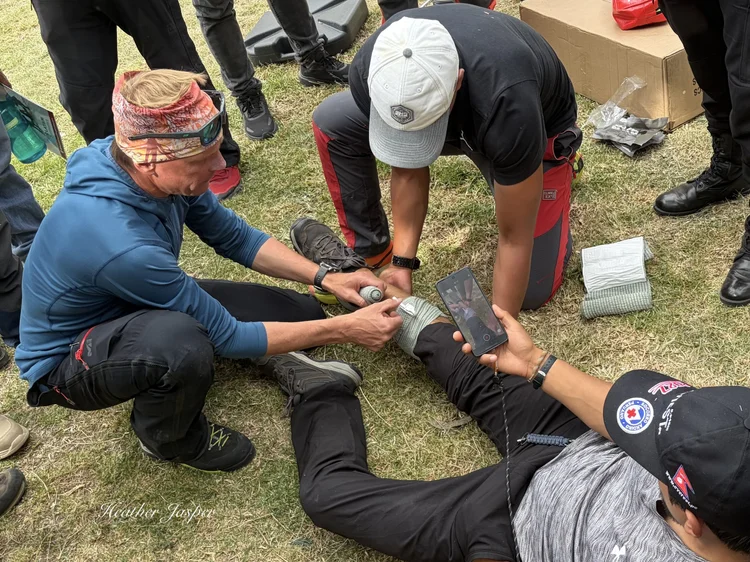
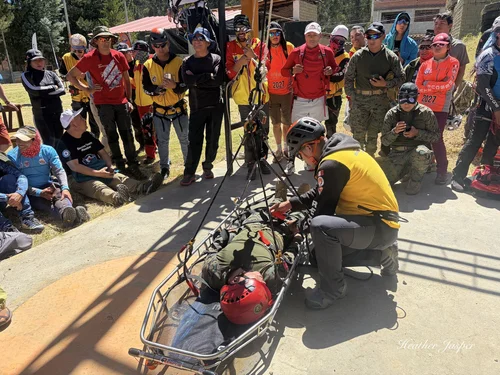
Florian demonstrates first aid.
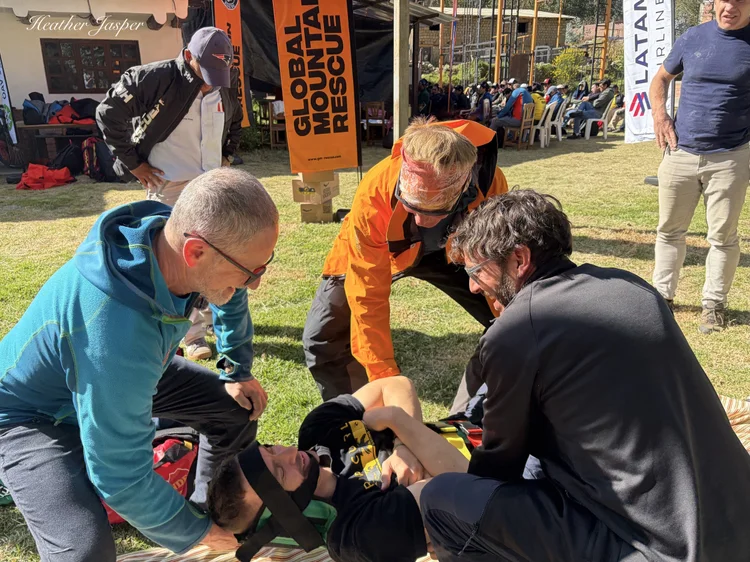
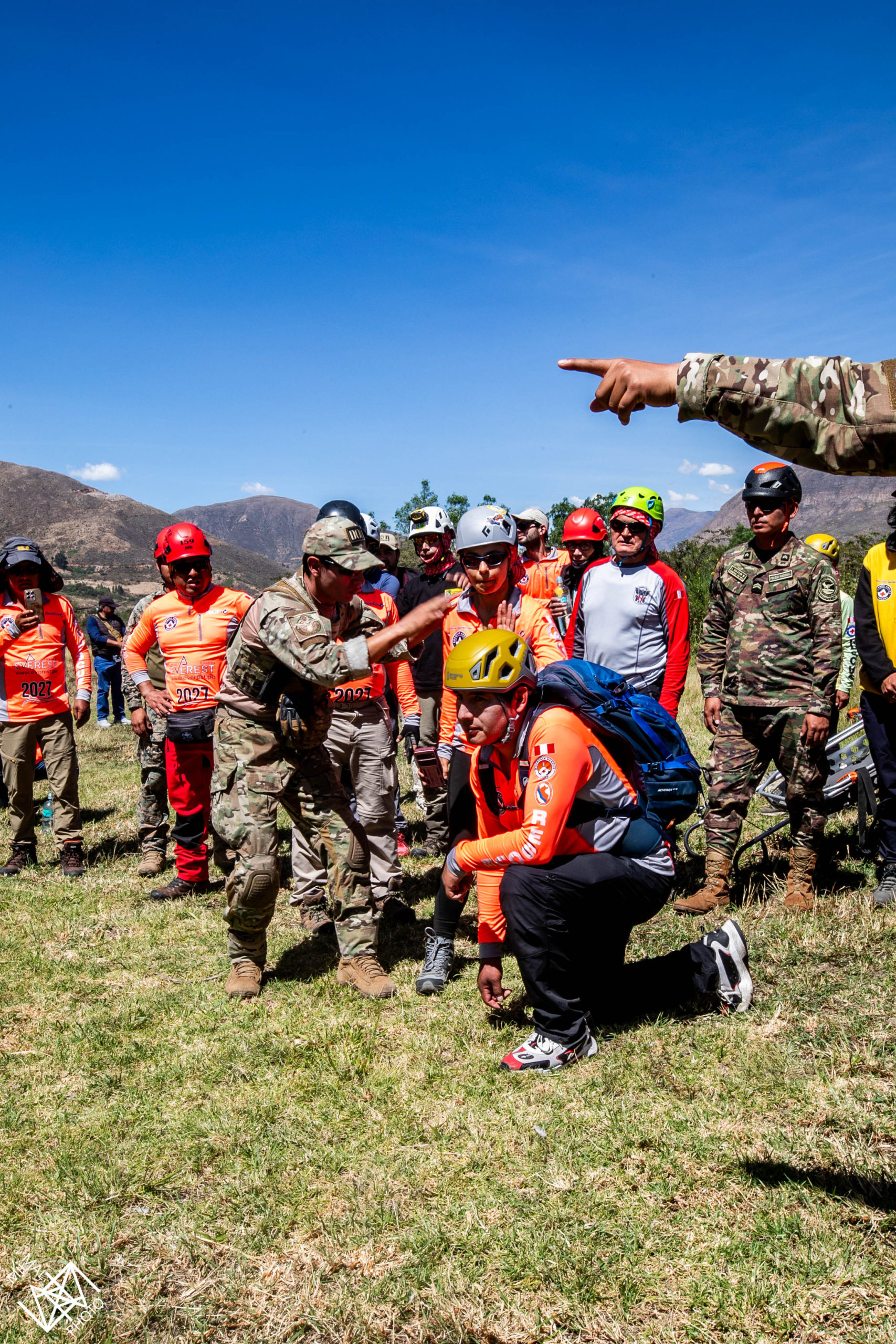
Course instructors practice techniques.

Day 1: Mountaineering First Aid Review

On the first day of the course, instructors with Socorro Andino Peruano worked with 90 participants to review important aspects of first aid, with an emphasis on the kinds of accidents often seen in the Cordillera Blanca: high altitude accidents in the mountains with serious injuries, hypothermia and altitude sickness. Instructors included Pietro Rago, Florian Wechselberger, Roman Gorodischenskiy, Luis Fernández (Peruvian Air Force Special Forces) and Luis Atalaya (SAR).

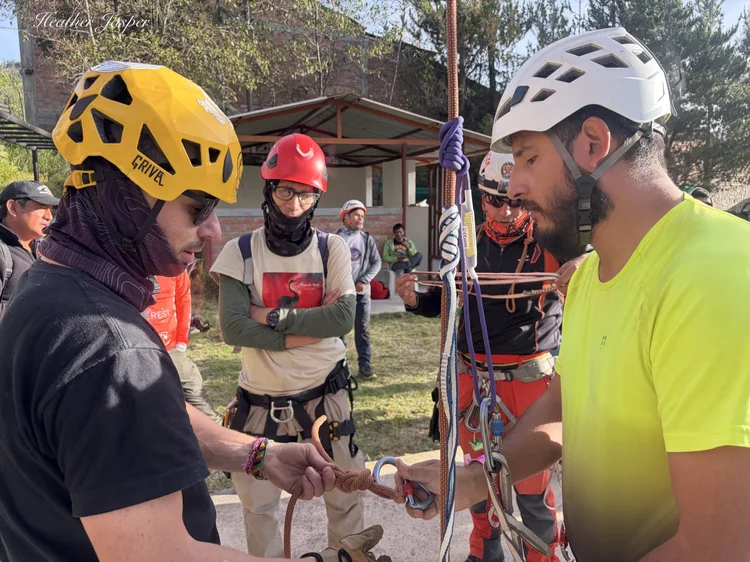
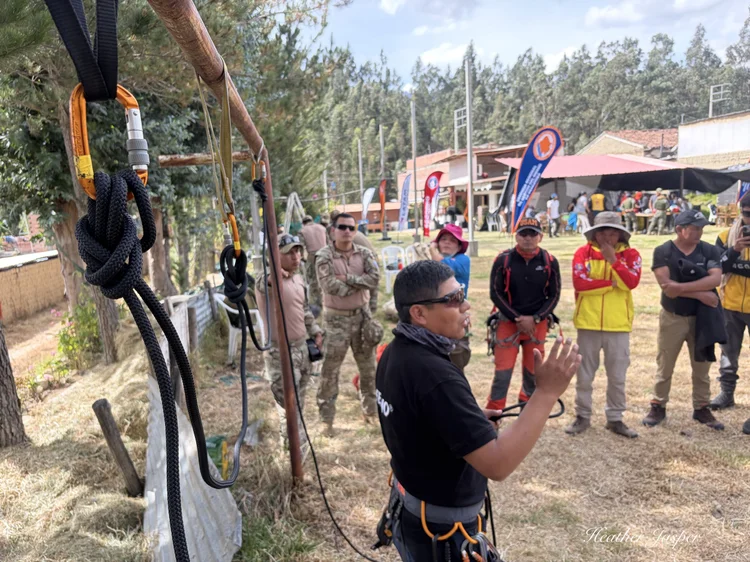
Roman demonstrates self rescue techniques.
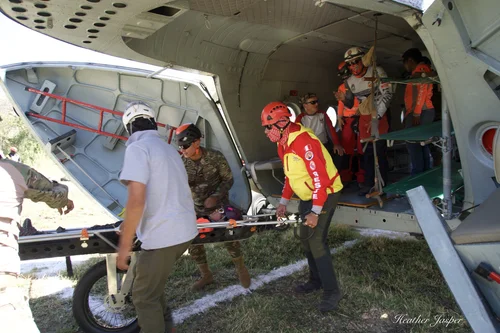
Luis shows how rescue equipment is attached inside helicopters.

Day 2: Rescue Techniques Review

During the second day, participants reviewed equipment used for self-rescue, organized rescue and rescue with helicopters. The instructors showed the equipment they recommend and explained how to use it and how to keep it in good condition. In the afternoon they practiced using the equipment and learned how to coordinate from the ground to helicopters coming to do aerial evacuations. Instructors included Pietro Rago, Florian Wechselberger, Roman Gorodischenskiy, Luis Fernández and Peter Valdez (Navy Infantry Commando Battalion).

Day 3: Practice with Stretchers

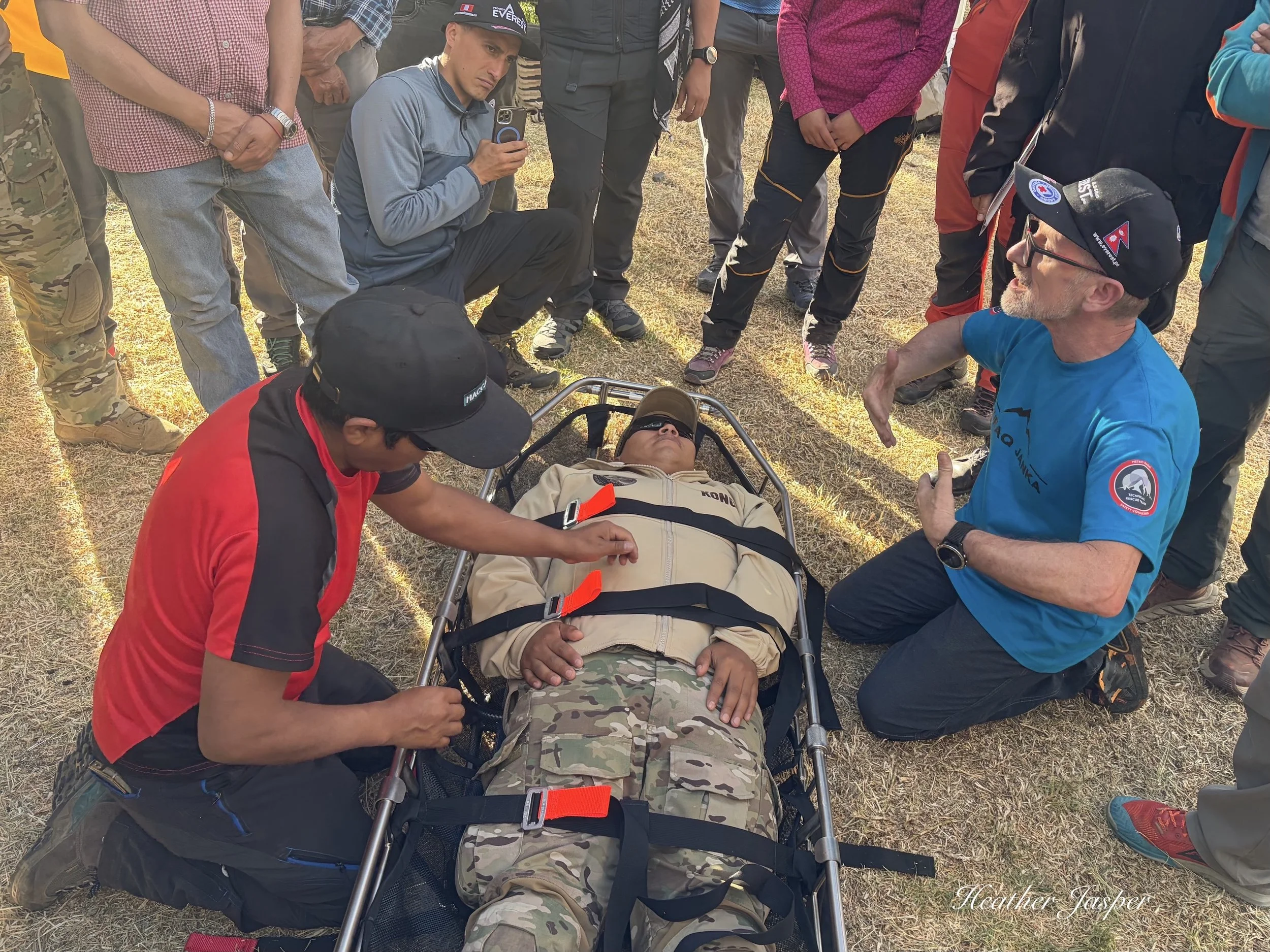
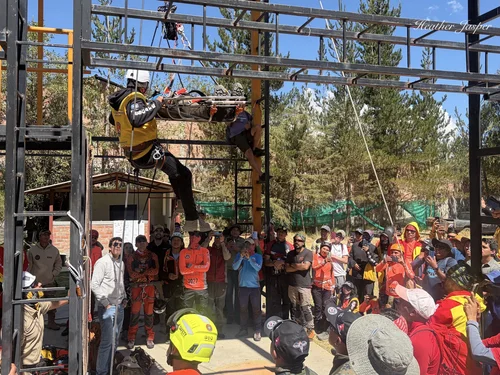
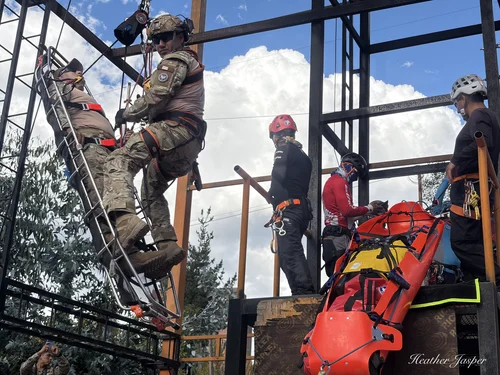
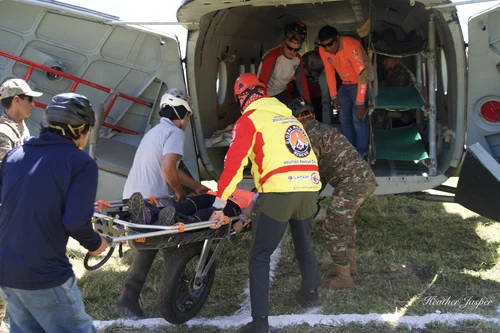
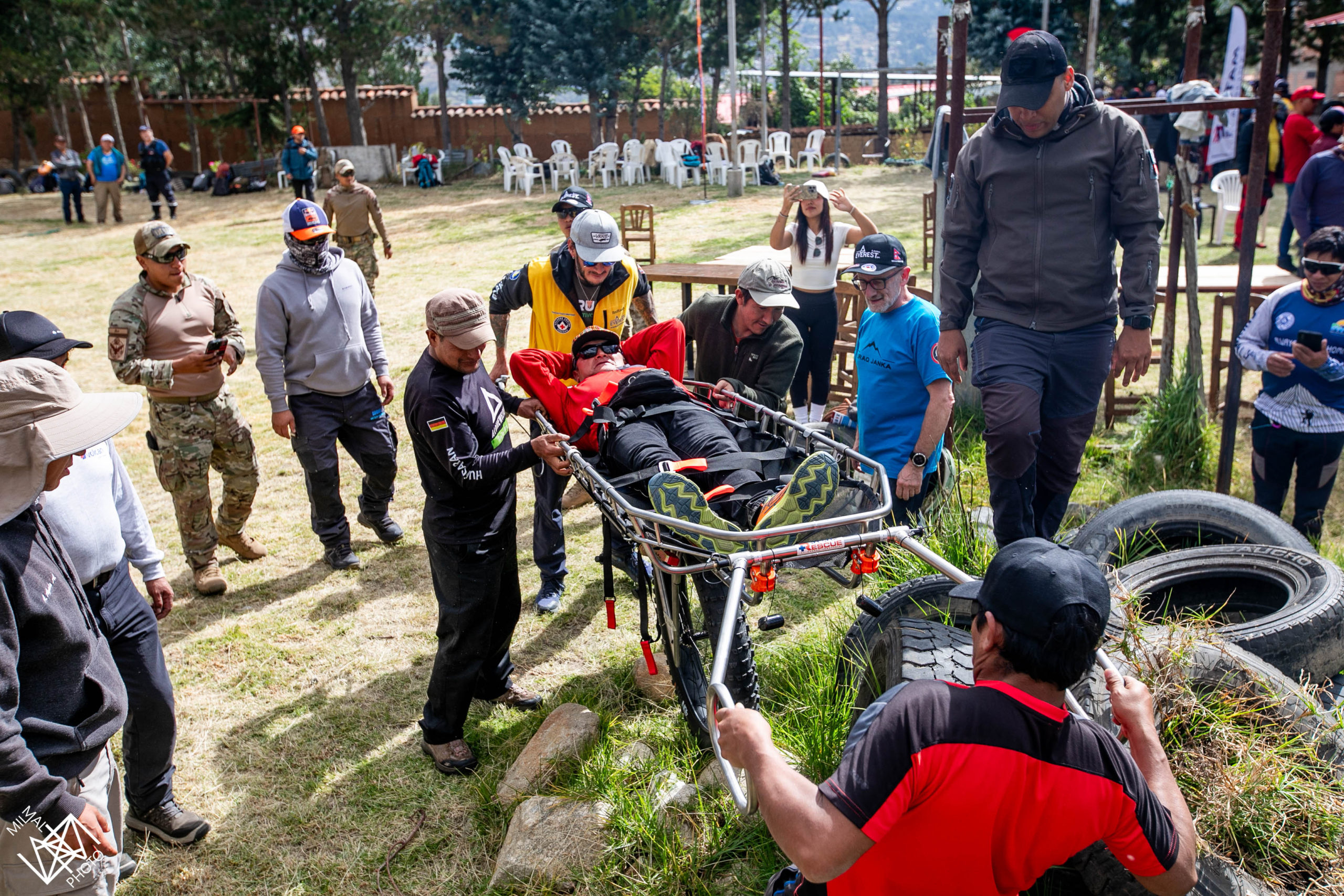
The third day focused on forming brigades for the evacuation simulation on the Mateo glacier. Participants organized integrated brigades of civilians and military for reconnaissance, rescue, triage, receiving the victims, central command, onsite command, air control and heliport security. In the afternoon they practiced raising and lowering a stretcher from a rescue simulation platform and practiced anchor systems for rescue situations with and without helicopters. Instructors included Pietro Rago, Florian Wechselberger, Luis Fernández, Peter Valdez and Roman Gorodischenskiy.
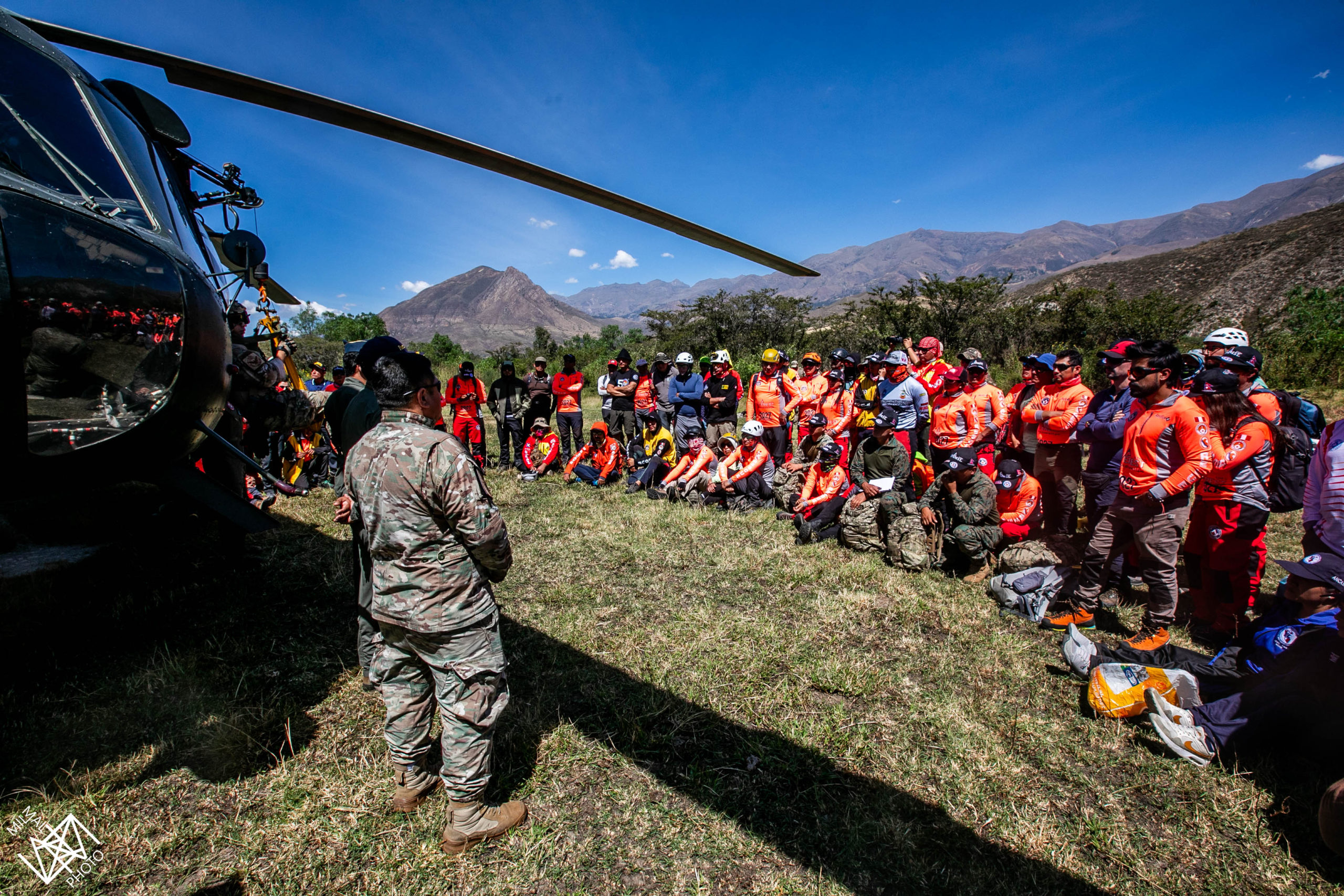
The morning started with a presentation by the helicopter’s crew before participants broke into groups for three stations.

Day 4: Helicopter & Radio Practice

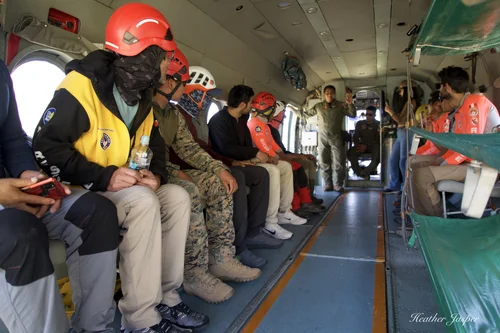
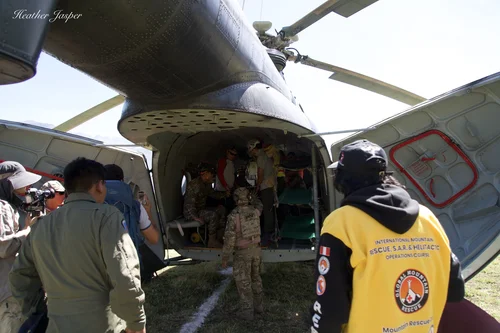
The fourth day brought the first chance to practice with a real helicopter, and participants went to the heliport in Caraz, about 70km/43mi north of Huaraz to work with a grounded and stationary MI-8 helicopter. In the morning FAP officers presented tactical information about the helicopter and in the afternoon the rescue brigades divided into three groups and rotated between three instructors for tactical practice.

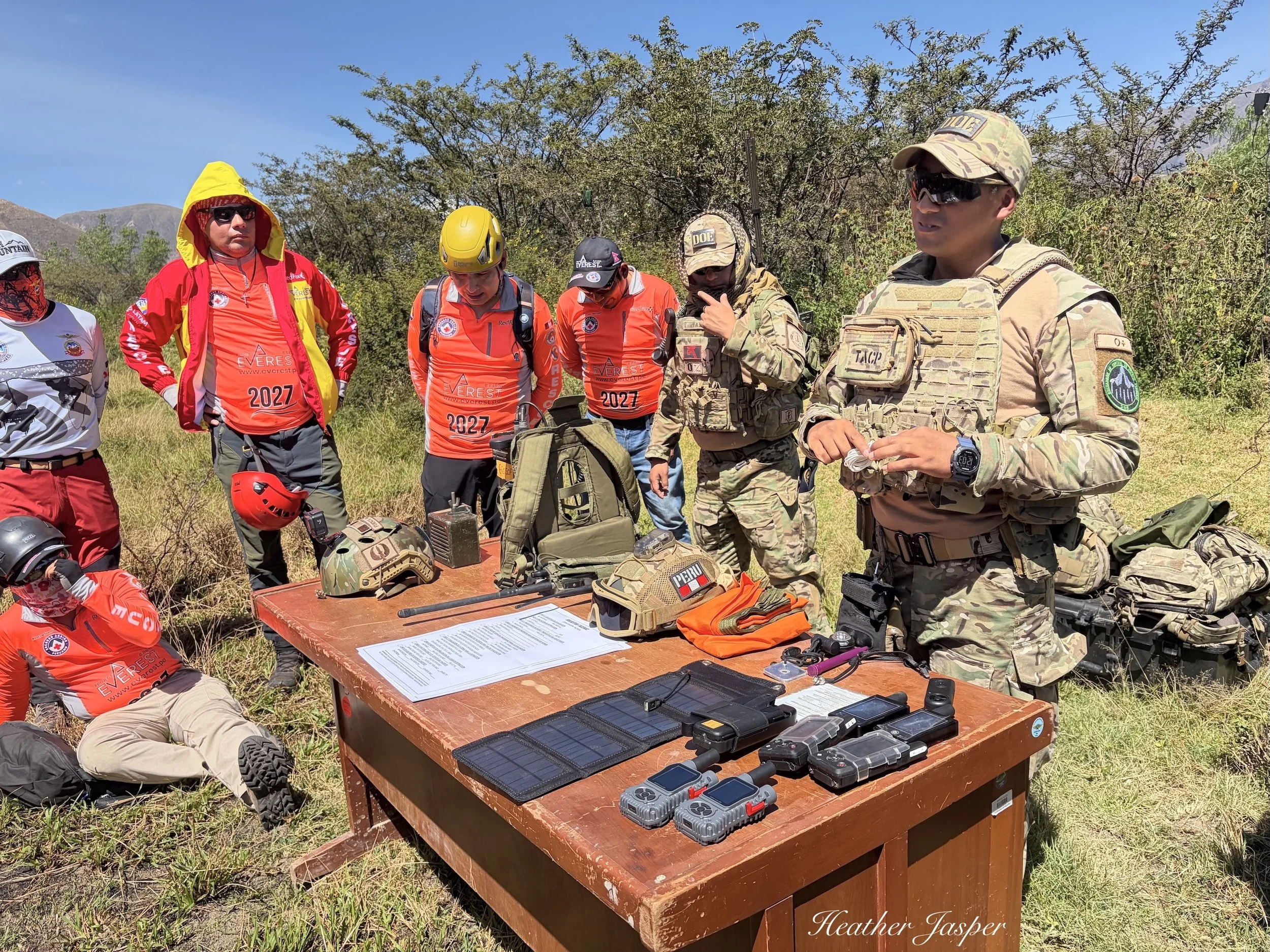
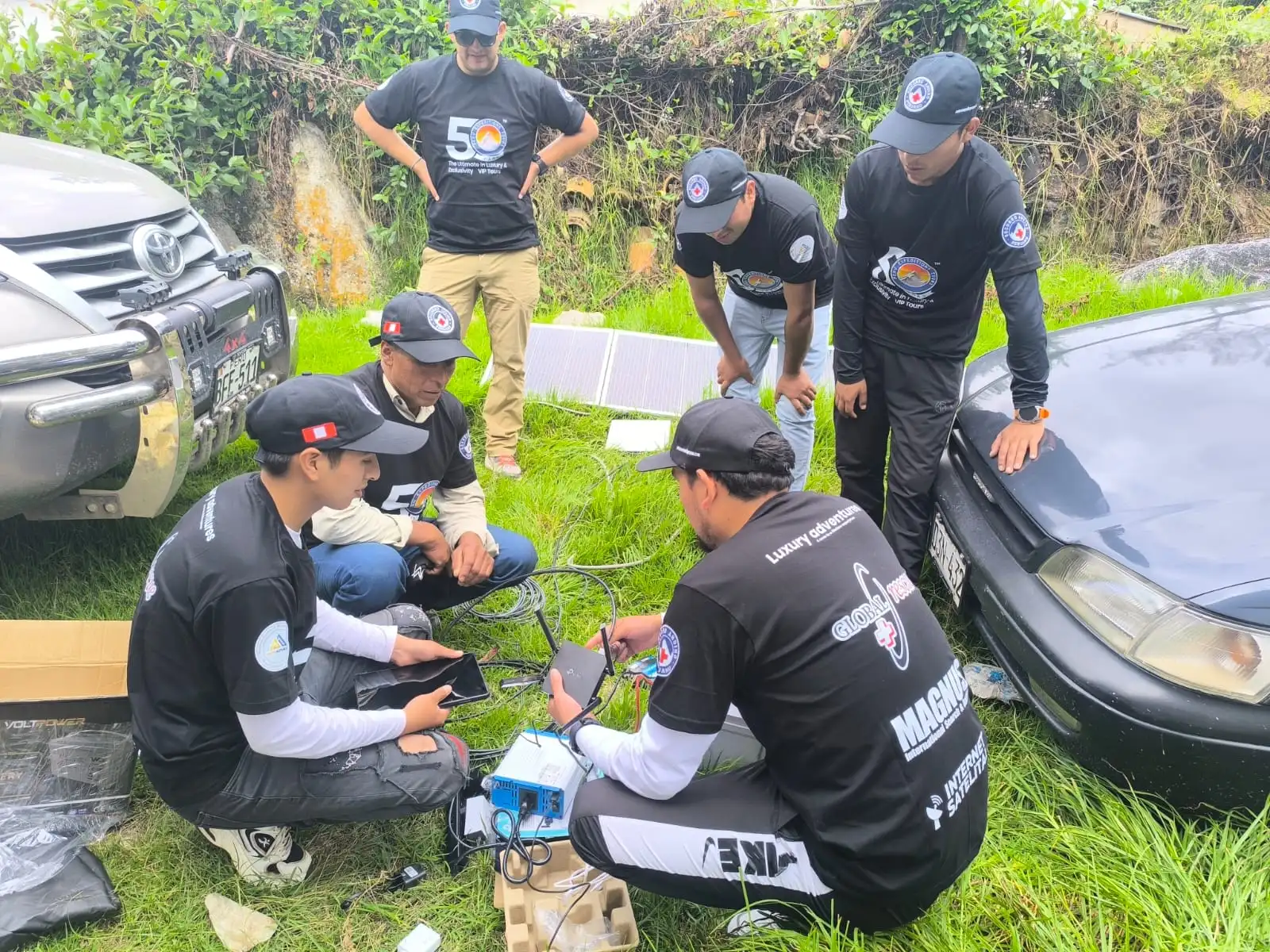
SO1 Luis Benjamín Rios Ortiz showed the different communication systems that the Peruvian military uses and which ones civilians can use during rescue operations to communicate with military rescue personnel.

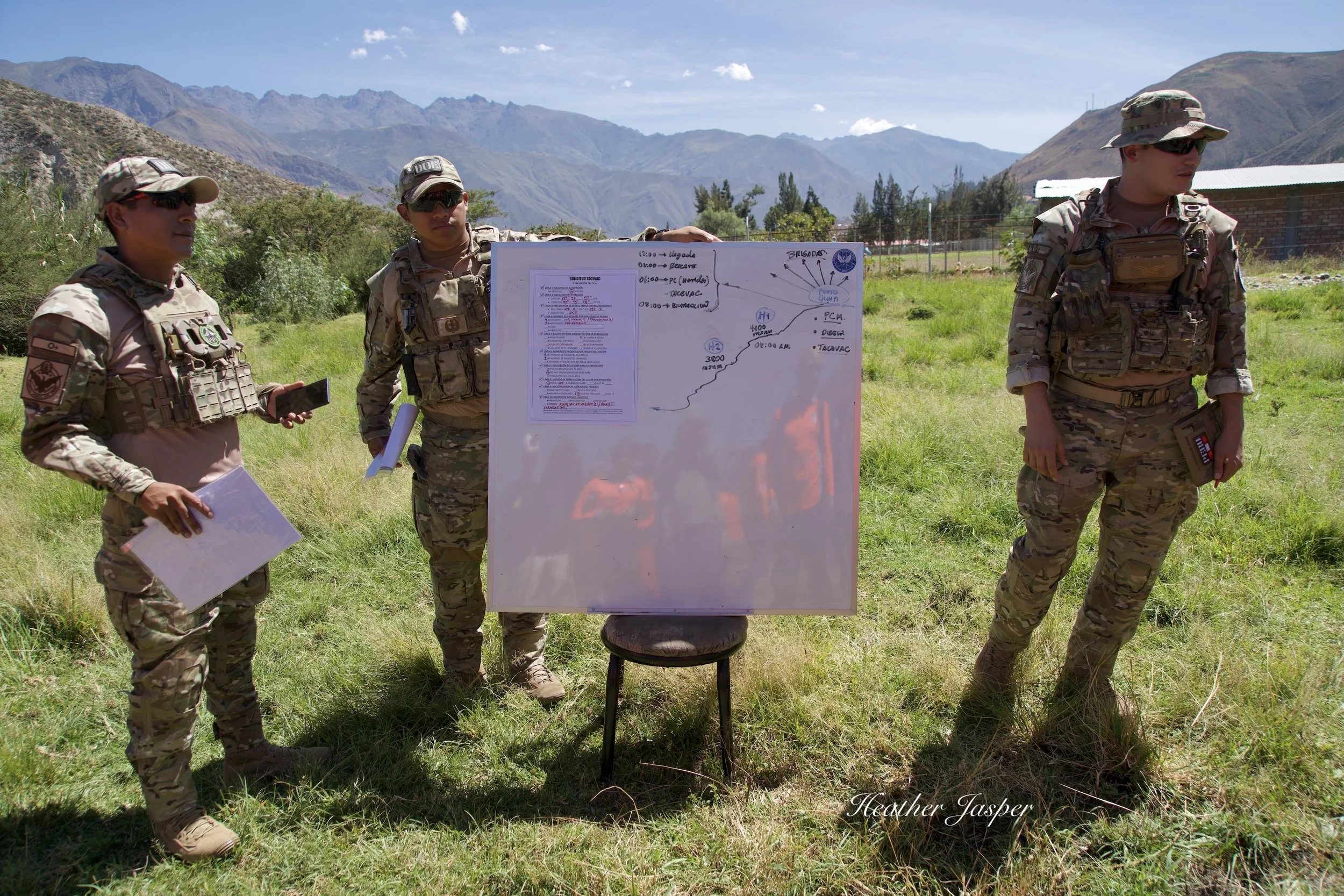
FAP DOE Lieutenant Daniel Gonzales Culqui taught the report format used for requesting aerial evacuation and support.
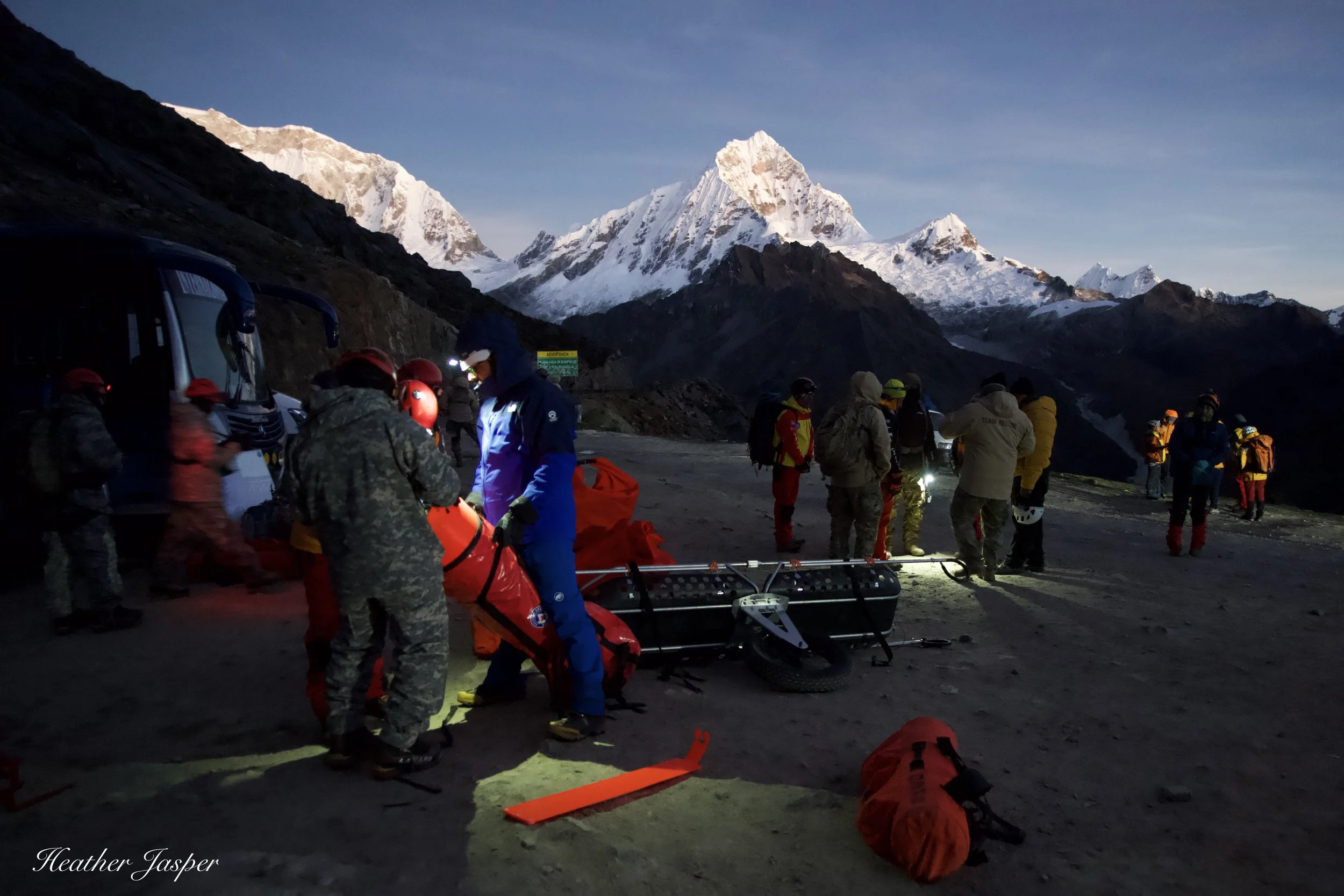
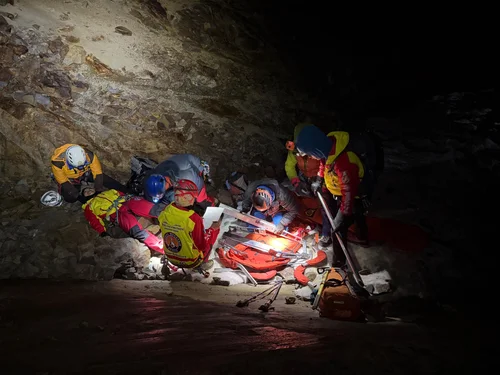
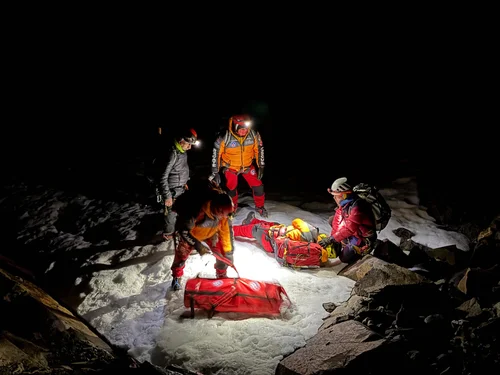
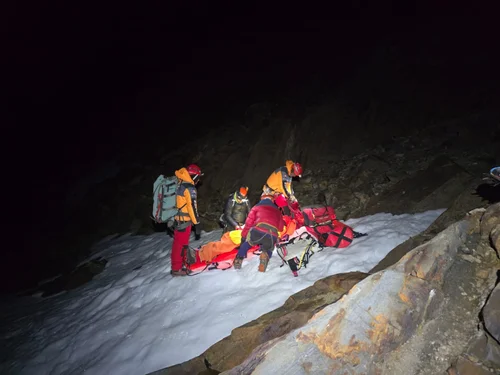
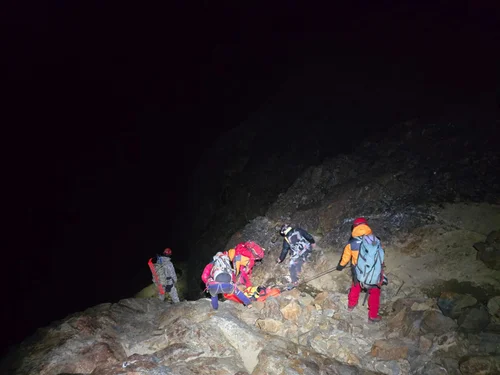
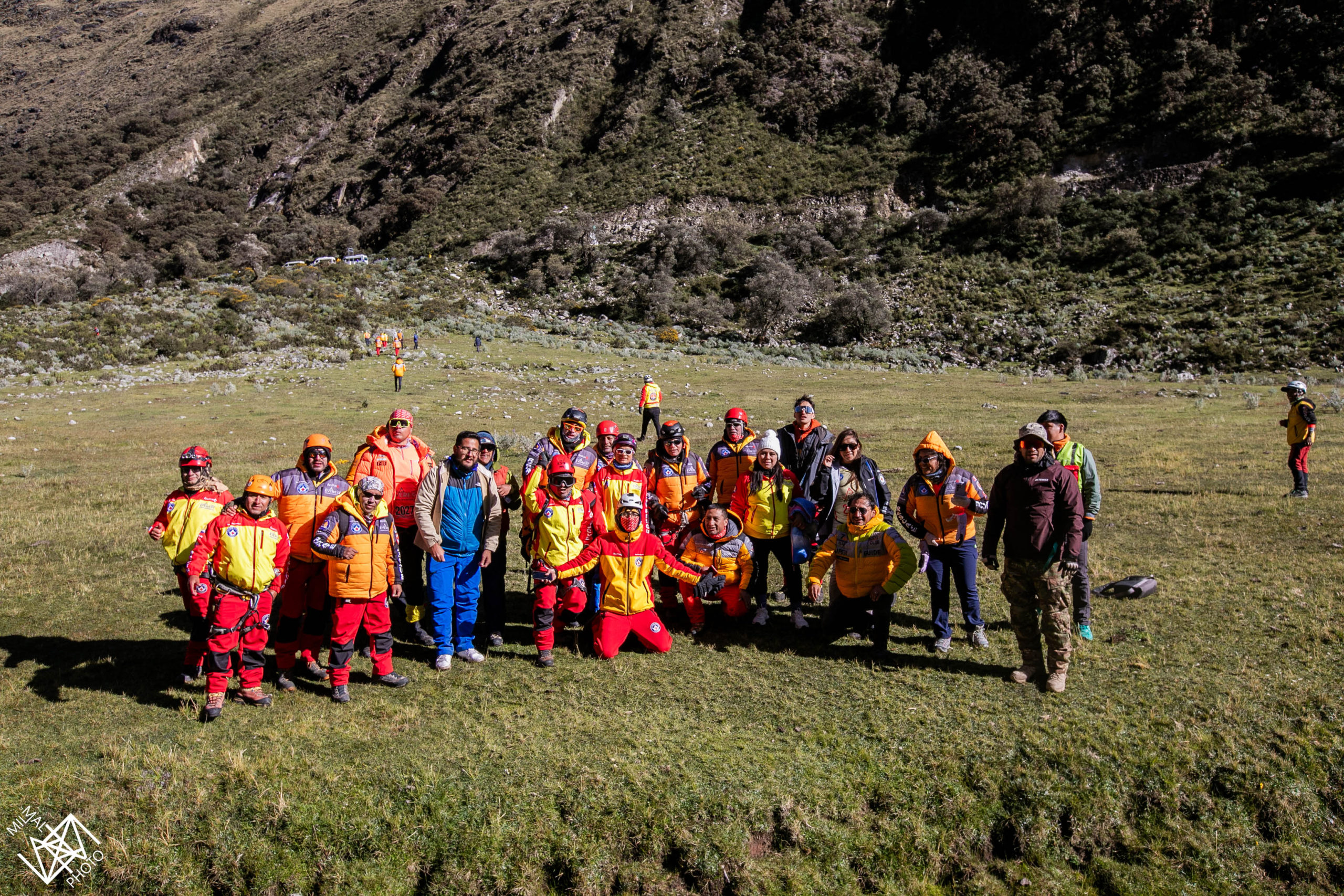
At 6am, rescue teams that worked through the night brought six “victims” down off the Mateo glacier – the same one I climbed in 2022, above.  

Day 5: Rescue Simulation

The final day was the simulation, which began at 9pm the night before, for two reasons. One was that emergency calls often come at the least convenient moment and the other was that the helicopter crew had determined that 8am would be the most convenient time for them to make the first evacuation flight.
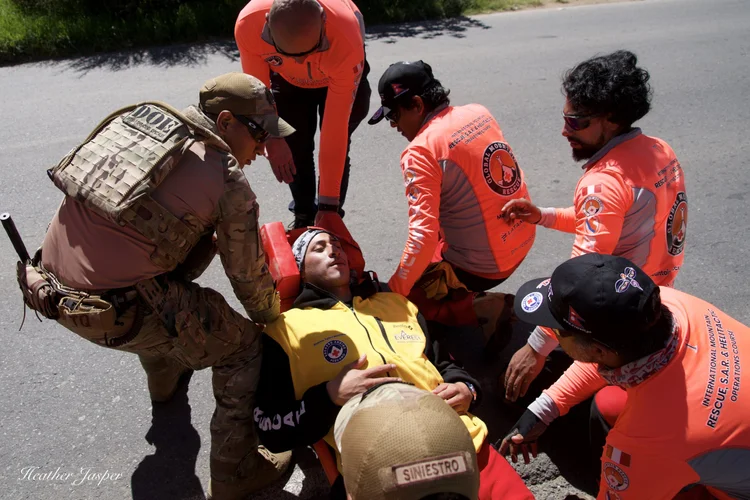
The rescue simulation was a success with all six “victims” evacuated off the glacier before sunrise. The two helicopter evacuations from the pre-determined landing points were likewise conducted successfully. Three people were evacuated by helicopter to the heliport in Caraz.

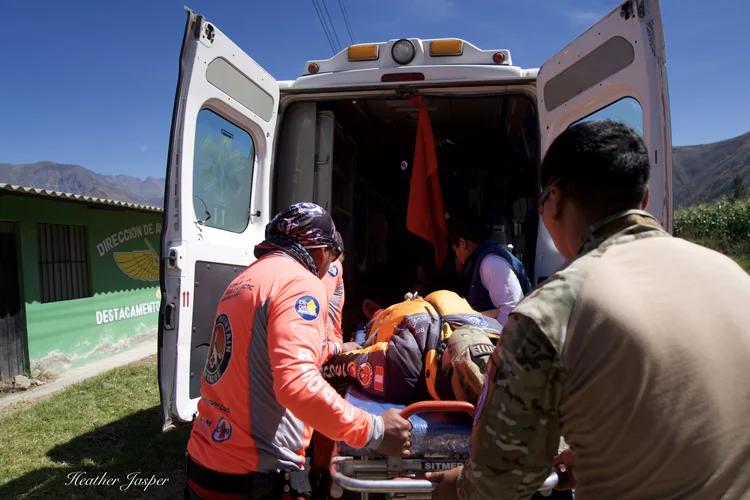
Three people were evacuated by ambulance to the paramedic station at the heliport.

This first heli-tactical aerial evacuation course by Socorro Andino Peruano greatly improved Peru’s capacity in SAR and is expected to repeat every year so that more guides, SAR experts, paramedics, firefighters, police and other civilians have the opportunity to train alongside the Peruvian military branches that conduct helicopter evacuations.

Entradas recientes

GET IN TOUCH WITH OUR DEDICATED TEAM

Your message matters: immediate response guaranteed

How can we help you?
OFFICIAL ANNOUNCEMENT!

Helicopter Rescue Project

From May 23 to 27, 2026
The Peruvian Andean Rescue Association – S.A.P. is pleased to announce the FIRST HELITACTICAL TRAINING AND AERIAL EVACUATION COURSE IN PERU, aimed at rescuers, mountain guides, and emergency professionals.